


CHAIRMAN'S REPORT
Introduction
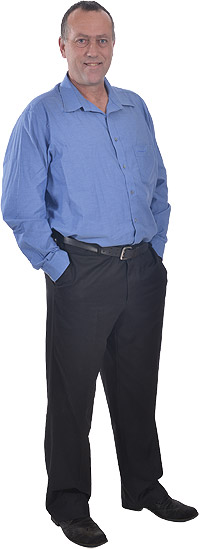 |
| Werner Büchner |
The year under review proved exceptionally challenging for consumers, producers and the dairy industry as a whole. Our six months results presented to the market in March this year came off a very low base, and as communicated at the time, the second half of the year did not benefit from similar low comparatives and was further impacted by a number of other factors which limited sales volumes growth and therefore earnings growth.
Against a backdrop of a weakening rand, rising CPI and high food inflation, these systemic issues were further impacted by one of the most protracted series of industrial actions in our democracy’s history.
Operational overview
This year was characterised by significant cost pressures related to a weakening rand with resulting higher energy and packaging costs. The second half of the year also saw an above inflationary increase in the cost of raw milk. This led to a dramatic increase in the cost of our products. As a Board we decided it is prudent to apply a gradual approach to selling price increases. We believe that this will be more acceptable to consumers and protect our hard fought market shares. These cost increases will most likely only be recoverable in the market over time.
Project Cielo Blu was completed during this financial year, and the benefits flowing from this project proved a major beachhead in mitigating inflationary pressures, especially with regards to fuel and other supply chain costs to some extent. R97 million worth of savings per year have already been realised.
This project will continue to provide a platform for growth in years to come by concentrating long life ambient product manufacturing capacity at the milk source and thereby reducing supply chain costs.
I alluded to our next phase of capital spend in my report last year. A total of R273,6 million of capital expenditure projects, excluding Project Cielo Blu, have been approved in the year under review and are mostly completed. This excludes an investment in yoghurt production to take advantage of the termination of our restraint of trade undertaking in favour of Danone with regard to yoghurt and custard products at the end of December 2014.
The Board continuously seeks to balance short-term earnings with long-term growth aspirations. This includes seeking new possibilities to expand our current product offerings as well as our presence in Africa.
The first important event in achieving our goal was the termination of the restraint undertaking referred to above which prevented us from expanding into some lucrative product categories. Clover has been providing a range of services to Danone Southern Africa for some time relating to yoghurt and other fermented products. This included the supply of raw milk and other raw material procurement, manufacturing and packaging of custard, sales and merchandising services as well as distribution and certain IT services. The majority of these service contracts ends at the end of December 2014. Although this will reduce our revenue from services rendered in the short-term. Clover is now free to pursue certain attractive high-growth product categories, including yoghurts and desserts. Our decision to not extend the contracts in their current form is unlikely to have a material negative effect on Clover’s earnings potential in the medium to long term.
This opportunity was fast tracked by the acquisition of Dairybelle (Pty) Limited’s yoghurt and UHT milk business which we announced to the market in May this year, effective 1 January 2015 with regards to the yoghurt. Competition Commission approval in this regard is still pending.
We are convinced that our brand strength will help us achieve a strong market position which, together with additional principal distribution business, will allow us to achieve higher returns on a sustainable basis.
The second important step which relates to our expansion into selected African markets remains a work in progress and although we are committed to drive Clover’s entry into new markets, the local and immediate opportunities which became available following the termination of the restraint of trade agreement with Danone have taken precedence.
Since listing, we’ve seen a steady increase in offshore shareholding, including a growing interest from USA-based investors.
Dairy industry overview
Global overview
Historically, international dairy markets have been characterised by high volatility, largely due to their dependence on external factors such as favourable weather conditions and the macro-economic environment.
The observed cyclical pattern is common in the dairy industry. Demand creates higher prices that producers respond to, where after the increased supply forces prices down again. In the past few years, the cycle has been steeper at times when weaker economic conditions coincided with high milk production, as was the case in the first half of 2012.
This was made clear at the beginning of 2013, when hot and dry conditions in New Zealand led to lower volume produced which resulted in sharp increases in the world price, leading to an all-time high in February 2014. As only six percent of world production of dairy products is traded in the world market, climatic conditions in major exporting countries play a significant role in the determination of world market trends.
Although this price has since come down significantly from these peak levels, the price in the medium term is still expected to stabilise well above the levels experienced before the 2007 price hike. The nominal price is expected to increase over the medium term, due to higher feed prices and a strong demand for dairy products from developing economies.
Locally
Milk production for the reporting period was lower than the prior year comparative, mainly due to on-farm cost pressures. This was exacerbated by an unexpected sharp increase in South African grain prices especially in the second half of the year. Amongst other indicators, the milk/feed price ratio is used to adjust the price we pay for raw milk.
As a result, we implemented a series of farm gate price increases throughout the year which will be recovered through further selling price increases as discussed earlier. Clover actively engages with its producers and robust discussions took place at the latest annual producer meetings in October 2013. Ultimately market forces including supply and demand are the key determining forces in a free market economy.
One clear example of such market forces is the impact that the entry of new players in the South African UHT market has had on this significant category for both Clover and the drinking milk market as a whole.
We constantly take into account our milk market, milk supply, overall market conditions and future sustainability in our decision making regarding farm gate milk prices. Of course, the various factors mentioned above will put additional strain on sales volumes and will remain the key elements impacting the short-term performance of the company.
Trade represents a small share of fresh dairy product consumption in South Africa. Consequently, the production and utilisation of fluid milk exists in a tight balance, resulting in continuous cyclical shifts of the equilibrium price as both producers and consumers respond to relevant market signals.
Its sensitivity to changes in climatic conditions renders milk production particularly volatile. Apart from typical seasonal variation that reflects climatic conditions, continuous changes in the milk to feed price ratio cause fluctuations in milk supply, as producers respond to changes in relative profitability by increasing or decreasing the level of supplementary feeding.
General market consensus is that economic conditions will remain muted for the foreseeable future. In this context we expect industry consolidation to continue and even to escalate in both the primary and secondary markets. We regard supply chain and production efficiencies as two of the industry’s most important value drivers which will only be achievable through sufficient economies of scale.
(Information on the global dairy industry was sourced from The Bureau for Food and Agricultural Policy’s 10th baseline agricultural outlook covering 2014 to 2023.)
ADR programme
Since listing, we’ve seen a steady increase in offshore share-holding, including a growing interest from USA-based investors.
The Board felt this increasing interest warranted the launch of a non-capital raising sponsored Level 1 American Depository Receipt ("ADR") Programme which became effective on 3 December 2013. The Bank of New York was appointed as the depository bank for this programme.
We believe that this programme will enhance Clover’s visibility in the US and provide investors with the flexibility to invest without the administrative burden associated with cross-border and cross-currency transactions.
Financial capital
The continued deterioration of the operating environment, especially in the second half of the reporting period, made it difficult for Clover to achieve sales volume growth and therefore earnings growth.
More financial details can be found in the Chief Financial Officer’s report.
Governance and board
Our approach to governance is elaborated on in the Corporate Governance Report on this Integrated Annual Report.
During the reporting period, we remained committed to the objectives and recommendations of the King III Report on Corporate Governance for South Africa as well as the Code of Corporate Practices and Conduct.
Our interactions with stakeholders are elaborated on in the Report on Governance, Risk and Compliance on this Integrated Annual Report. More information on our shareholders is also available on the Overview section.
The Board consistently evaluates remuneration of executives and other key employees to attract and retain individuals of the highest calibre. In addition, we strive to align management’s long-term incentives with those of our shareholders.
The Remuneration Policy follows the internationally recognised practice of combining short-term remuneration with long-term incentives in order to compete for skilled resources in the short-term and align the interest of Executive and senior management with long-term value creation for stakeholders taking into consideration the complexity of a branded fast moving consumer goods company (in Clover’s instance consisting of dairy products, beverages products and various distribution services).
The Company’s Remuneration Report is available here.
During the year under review we continued to optimise the Board composition. I do believe that we have sound independent counsel and extensive depth as far as industry knowledge and experience is concerned, represented on the Board.
During the review period, Dr. JC Hendriks retired as a non-executive from the Board. On behalf of the Board and Clover, I want to thank Dr. Hendriks for his contribution over the past 23 years during which he was a director of National Co-operative Dairies for 13 years and a director of the Company for the last 10 years.
In addition, Messrs. NP Mageza and MG Elliott retired as Non-executive Directors from the Board during the review period. The Board thanks them for their valuable contribution during their tenure.
Mr. PR Griffin was appointed as a Non-executive Director with effect from 13 March 2014. He has been a milk producer since 1982 and was the Chairman of National Clover Producers Forum for two years.
At the Annual General Meeting held on 26 November 2013, Ms. B Ngonyama and Ms. NV Mokhesi were appointed as Clover’s first female Independent Non-executive Directors. I look forward to working with them as we drive Clover’s transformation to support its growth ambitions.
Six capitals brief
Human capital
Although this Integrated Annual Report is drafted primarily for providers of financial capital, it will be naïve to narrowly focus on value creation as the present value of future cash flows. Clover, like any business is greater than the sum of its parts, with each part directly or indirectly impacting on financial return.
Value is not created in the organisation alone – it’s dependent on the external environment and created through relationships and the availability, affordability, quality and management of various resources.
For that reason the theme of this year’s Integrated Annual Report is human capital and value creation. It will tell the story of how Clover, by empowering and harnessing the skills of its people in the broadest sense of the word, will create and sustain value in the long term.
We continue to invest in our people, endeavouring to attract the best by aspiring to be the best employer to work for. Wherever possible, employee’s long-term interests are aligned with those of shareholders. To find out exactly what those long-term interests are, the Board asked the Remuneration Committee Chairman and Company Secretary to meet with some of Clover’s largest shareholders, specifically on the issues of remuneration and governance.
Dr. Booysen will provide more feedback on this in his letter to shareholders in the Remuneration report.
Our vision for Clover is not short term. It will therefore be detrimental to the business to have absolute focus on short-term financial measures. Following the meetings with our shareholders we will however phase in the return on equity targets as an additional performance condition for staff. This will be a gradual process which will require a culture shift as the Group, given its roots as a co-operative, has not entrenched this approach to measuring value creation in its people yet.
Clover is not only the largest dairy producer in the country, but also operates the largest chilled distribution network in Southern Africa.Transformation – B-BBEE update
Clover is currently a Level 6 B-BBEE contributor, which is the same as in the prior financial year. As reported previously, we are systematically changing our business to migrate to B-BBEE compliance Level 4 by 2015.
This transformation is evident not only in the organisation but at Board level as well, as I discussed in the Governance and Board section of my report above.
More information on our achievements and challenges in this regard is available in the Report on the Six Capitals at www.clover.co.za.
Natural Capital
It gives me pleasure to report on solid advances in our environmental impact measurements and controls. Project Cielo Blu by default enabled us to significantly reduce our carbon footprint through a more efficient distribution network.
Manufactured Capital
Clover is not only the largest dairy producer in the country, but also operates the largest chilled distribution network in Southern Africa. We are therefore aware of our responsibility to minimise emissions, wastage and water consumption.
Social and Relationship Capital
At the same time, we have a responsibility to our customers and the communities in which we operate. More details on these important sustainability drivers – including Clover Mama Afrika which this year has been running for a decade – are contained in the Integrated Annual Report on Clover’s website – www.clover.co.za.
The future value creation
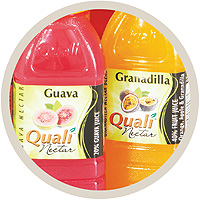
This future value creation incorporates Clover’s short, medium and long-term initiatives.
Short term
We expect the current subdued operating environment to continue for the foreseeable future, given the current cycle of interest rate increases, a low growth economy, rising unemployment and the aftermath of the protracted labour actions that has to work its way through the economy.
I believe that the anticipated industry consolidation will play an important role in ensuring a robust market that will continue to deliver against the growing needs of consumers and contribute to regional food security.
Medium to long term
From Clover’s perspective we remain focused on building on the solid base provided by Project Cielo Blu by continuously investing in new products and technology in addition to securing new principle business, entering into joint ventures and making acquisitions where there are synergies, to sustain momentum and deliver on our longer term strategy locally and across Africa.
Appreciation
I would like to thank my fellow Board members for their support during a very difficult year. In light of the challenges faced, I would like to commend Johann Vorster, his executive management team and all staff for their diligence and hard work.
Werner Büchner
Chairman
15 September 2014