



Chief FINANCIAL OFFICER’S report
We believe the financial statements present fairly, in all material respects, the financial position, financial performance and cash flows of the Company in accordance with International Financial Reporting Standards, and are free from material misstatements. The significant accounting policies adopted in the preparation of the financial statements are appropriately described in the financial statements section of this Integrated Annual Report. As members of management of the Company, we believe that the Company has a system of internal controls adequate to enable the preparation of accurate financial statements in accordance with International Financial Reporting Standards and in the manner required by the Companies Act.
Financial highlights
| 2014 R’000 |
2013 Restated R’000 |
% | |
| Revenue | 8 530 237 | 7 832 911 | 8,9 |
|---|---|---|---|
| EBITDA | 414 464 | 477 346 | (13,2) |
| EBIT | 282 276 | 371 624 | (24,0) |
| Headline EBITDA | 410 765 | 453 298 | (9,4) |
| Headline EBIT | 278 577 | 347 576 | (19,9) |
| Normalised EBITDA | 414 886 | 484 671 | (14,4) |
| Normalised EBIT | 282 698 | 378 947 | (25,4) |
| Net finance cost | (57 809) | (46 717) | 23,7 |
| Effective tax rate (%) | 20,9% | 29,2% | |
| Headline earnings | 187 464 | 214 894 | (12,8) |
| HEPS (cents) | 102,7 | 119,9 | (14,3) |
| Diluted HEPS (cents) | 97,8 | 111,5 | (12,3) |
| Normalised earnings | 188 276 | 237 497 | (20,7) |
| Normalised EPS (cents) | 103,2 | 132,5 | (22,1) |
| Capital expenditure | |||
| – Project Cielo Blu | 64 530 | 87 179 | (26,0) |
| – Recurring capital expenditure and other projects | 323 469 | 367 221 | (11,9) |
| Return on equity | 8,6% | 11,9% | (28,2) |
| Cash generated from operations | 403 067 | 219 198 | 83,9 |
| Dividends per share (cents) – Interim | 16 | 10 | |
| Dividends per share (cents) – Final | 16 | 22 |
Overview
 |
| Jacques Botha |
High cost inflation forced the Group to increase selling prices considerably during the year. Although the Board adopted a gradual approach to phasing in price increases, volume growth was nonetheless curtailed and in some product categories it resulted in market share losses. Weak volume performance in beverages underscored the effect that continued upward pressure on food and fuel prices as well as the cost of debt, had on consumers’ discretionary spend.
The devaluation of the Rand against major international currencies had a profoundly negative effect on the Group during the reporting period with the immediate effect being experienced most notably on fuel and packaging costs. These increases were however partially offset by exchange rate gains reported by certain African subsidiaries of the Group.
Continuous cost pressures on milk producers during the first three quarters of the year and strong competition in the primary milk market lead to the group increasing its farm gate milk prices considerably during the second quarter of the year. To curtail market share losses the Group adopted a more gradual approach to the recovery of cost increases resulting in disappointing second half results. This was further compounded by a shortage of raw milk during the last quarter of the year which mostly impacted on UHT and cheese sales. The normal seasonal low milk intake was exacerbated by Clover rebalancing its milk supply during the same period in preparation for its exit from supplying raw milk at cost to Danone Southern Africa on 1 January 2015. Clover was presented with an opportunity to reduce its milk supply in March 2014, and it opted to do so knowing that it would result in a temporary milk shortage during the winter of 2014, in order to avoid the potential damaging impact of a general volume reduction on Clover’s remaining producers.
We believe that the Company has a system of internal controls adequate to enable the preparation of accurate financial statements in accordance with International Financial Reporting Standards and in the manner required by the Companies Act.
Economic viability
In order to remain economically viable, Clover needs to continuously evolve its business, partnerships and products. During the review period, Clover continued with its strategy of investing in and concentrating on branded and value-added products. International research shows that traditional dairy companies have operating margins of around 3% to 5% compared to their counterparts who place a strong focus on value added products and generally obtain operating margins well above 5%.
In its quest to grow its range of branded and value-added products, the Group frequently identifies and assesses potential mergers and acquisitions or joint venture opportunities with the view of unlocking possible supply chain synergies. This is done in tandem with maintaining Clover’s traditional dairy business. The Group only considers opportunities that will enhance margin and shareholder return sustainably.
Comprehensive income
Following changes to International Financial Reporting Standards (“IFRS”), the Group is no longer allowed to account for its interest in the Clover Fonterra Ingredients joint venture using the proportional consolidation method and is now equity accounting for this joint venture. The comparative figures for the year ended on 30 June 2013 have been restated accordingly and will differ from the results published at the time.
Headline earnings
Headline earnings decreased by 12,8% from R214,9 million at 30 June 2013 to R187,5 million for the year under review.
This decrease in headline earnings constitutes:- headline operating profit, which reduced by 19,9% or R69,0 million;
- net finance costs which increased by 23,7% or R11,1 million;
- headline income tax which decreased by 49,7%; and
- non-controlling interests which increased by 87,8% or R1,1 million.
Headline earnings per share decreased by 14,3% (17,2 cents) or 1,5% more than headline earnings, as a result of an equity settlement of vested share appreciation rights during the year.
Revenue
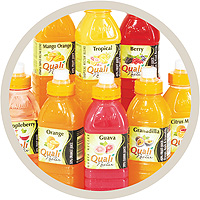
Revenue increased by 8,9% to R8 530,2 million.
Revenue from sale of products increased by 8,9% with average price inflation for the year of 9,7%. Overall sales volumes (expressed in milk equivalent for those products containing dairy) declined by 0,8%. Excluding the effect of the exit from the Famous Brands bulk mozzarella cheese business during the comparative period, and the Nestlé Purelife water volumes, which only contributed to the current year volumes, sales volumes declined by 2,7%.
The revenue from services rendered to principals increased by 2,5% to R822,0 million. Several factors accounted for the relatively small increase being:- The state of the South African economy and restrained consumer spending undoubtedly also affected the businesses of our principals with volumes lower than the previous year in many cases;
- The cessation of the primary distribution services to Danone Southern Africa at the end of February 2013. Primary distribution services unlike secondary distribution services are largely outsourced and principals billed for the actual cost. Correspondingly, the primary distribution expenditure also reduced with little effect on profit. The loss in this primary distribution revenue was largely but not fully made up by the new Enterprise business that commenced during June 2013 and the new top end Red Bull merchandising business;
- The services rendered to the Manhattan Iced Tea joint venture prior to Clover obtaining full ownership of Manhattan Iced Tea during November 2012, after which it became internal charges; and
- Annual contractual tariff increases, with principals.
Revenue from the sale of raw milk in the previous year was abnormally low due to a difference in interpretation of the milk supply agreement with Danone and this anomaly was rectified during the second half of the 2012/13 year. The normalisation of this situation and the growth in demand from Danone led to a 21,6% increase in raw milk sales. This revenue makes no contribution to profit as the milk is sold at cost.
Cost of sales
Sharp increases in raw material, packaging and milk collection costs caused cost of sales to increase by 10,1% year-on-year notwithstanding a substantial 12,8% reduction in primary distribution charges following the termination of primary distribution services to Danone in February 2013.
Charges against sales were 70% or R62,2 million higher than the previous year, mostly as a result of much reduced promotional activity during the second half of the previous year and the new Nestlé Purelife water business.
Farm gate milk prices were increased in March 2013 and again in February, March and April 2014 (combined effect of approximately 15%). Together with the R91 million increase in raw milk sales to Danone it accounted mainly for the 10,1% increase in raw material costs. Without the cost of the higher raw milk sales, raw material costs increased by 7,2%.
Packaging costs spiralled upwards by R139,2 million or 17,2% of which the R25,3 million or 3,1% can be attributed to the new Nestlé Purelife water business. The weak Rand not only had a direct impact on carton packaging but plastic packaging prices also, contributing heavily to this hike in packaging costs, considering that overall sales volumes for the year were flat on the prior year.
Milk collection costs were up by R38,4 million or 12,1% of which fuel cost increases, directly and indirectly through contractors’ rates, accounted for a large portion.
Manufacturing costs increased by 10%, despite savings from the closure of the Mayfair beverages factory as part of Project Cielo Blu. This was largely offset by manufacturing costs relating to the new Clover Waters plant which was taken over from Nestlé. In addition, Clover was unable to contract manufacture certain products for a principal during a portion of the previous financial year because of the relocation of equipment as part of Project Cielo Blu. These associated costs have now been included for the full year.
The termination of primary distribution services to Danone in the previous year was the main contributor to the 12,8% (R63,7 million) reduction in primary distribution costs. The inclusion of Nestlé Purelife water however increased this cost by R21,5 million with considerably higher fuel costs also playing a significant role.
Gross profit
The gross margin declined from 27,1% to 26,2% due to the under recovery of raw milk, packaging and fuel cost increases through selling prices. When the back to back raw milk sales to Danone is excluded the margin contracted from 28,6% to 27,9%.
Other operating income
Included in other operating income are the following amounts:- R20,7 million gain by Clover Waters on the acquisition of the Nestlé water business. This amount is shown after taxation as required by IFRS and the tax thereon does not form part of the taxation expense, which reduces the effective tax rate for the year; and
- R17,0 million foreign exchange gains on Rand denominated amounts owing to Clover SA by Clover Botswana and Clover West Africa on the weakening of the Rand against their currencies.
Selling and distribution costs
Distribution costs were negatively affected by the fuel cost increases during the year. The new Enterprise, Nestlé Purelife and additional Red Bull business also contributed to the inflation increase of 13,2% or R206,6 million.
Administrative expenses
Administrative expenditure reduced by R8,5 million or 4,1% as no profit based short-term incentive bonuses were provided for 2013/14 as well as below inflation staff cost increases to senior management for the year. In addition the early termination of a lease agreement led to the reversal of previously straight-lined lease costs.
Restructuring expenses
The closure of the Mayfair beverages factory as part of Project Cielo Blu required the relocation of equipment between factories and the associated costs could not be capitalised. R5,5 million was expensed in this regard. In addition equipment to the value of R3,9 million was scrapped. During the year R7,2 million was spent on retrenchment costs.
Operating profit
Operating profit decreased by 24% to R282,3 million. Excluding capital profits, headline operating profit reduced by 19,9% to R278,6 million. However, the Group’s restructuring costs decreased by R19,7 million and normalised operating profit, after taking this into account, decreased by 25,4% to R282,7 million.
The under recovery of costs in the challenging trading environment caused the operating margin to contract from 4,7% to 3,3%. The normalised operating margin similarly reduced from 4,8% to 3,3%.
Profit for the year
Profit for the year attributable to equity holders of CIL was 21,8% or R52,0 million lower at R186,7 million after the R89,3 million decrease in operating profit, a R11,1 million or 23,7% increase in net finance charges a R49,2 million reduction in the income tax expense and a R1,1 million increase in non-controlling interest.
Interest-bearing debt for the year ended only R37,6 million higher than the previous year although the average debt levels throughout the year were consistently higher than in the previous year. The reduction in profitability was largely offset by non-cash expenditure and a release of cash from working capital, mainly from much lower inventory levels following the milk shortage during the last quarter of the year. Consequently the increase in net finance charges was contained to R11,1 million.
The effective tax rate reduced from 29,2% to 20,9%. Included in profit before tax is the gain by Clover Waters on the acquisition of the Nestlé water business. In terms of IFRS this amount of R20,7 million is disclosed after tax and the related deferred tax expense is therefore not included in the tax expense. This reduced the effective tax rate by 2,4%. The effective tax rate was reduced by a further 2,6% through the recognition of a deferred tax asset relating to the assessed loss in the Real Beverages Company not previously recognised. In terms of IFRS, the Group’s share of CFI’s net after tax income is now equity accounted and has to be shown above the profit before tax line although it represents an after tax profit. This contributed to a 1,7% reduction in the effective tax rate. In addition, prior year tax adjustments accounted for a further 1,5% reduction in the effective tax rate.
Nestlé’s 30% shareholding in Clover Waters caused non-controlling interests in profit for the year to increase by 87,8% or R1,1 million.
Return on equity
The Group’s lower profitability reduced the Return on Equity from 11,9% to 8,6%.
Dividends
The Company declared and paid an interim dividend of 16 cents per share during April 2014. A final dividend of 16 cents was declared by the Board, which will bring the final dividend for the current financial year to 32 cents. This is equal to the dividend paid in the previous financial year which is in line with the Company’s dividend policy to at least maintain dividends in the event of HEPS ending lower than the prior financial year.
Members of Clover’s Finance Department oversee and prioritise profitable projects targeted to increase operating margins and returns to shareholders, which would be funded while maintaining an optimal debt to equity ratio.
| Major projects for the year included: | R’000 |
| Port Elizabeth ambient store | 74 230 |
|---|---|
| Consolidation of Parow and Stikland production | 56 004 |
| Tropika 200 ml Prisma pack line | 24 678 |
| Clayville beverages inline blending | 24 069 |
| Ixopo milk procurement depot expansion | 15 771 |
| Production voltage dip mitigation | 14 704 |
| Fire protection | 15 404 |
| Clayville chilled capacity extension | 7 970 |
| Refurbishment of George depot | 8 060 |
| Cielo Blu | 64 530 |
| ERP system upgrade | 9 626 |
Clover has aligned itself with Government initiatives to increase manufacturing capacity and local business competitiveness and to reduce the consumption of natural resources, especially energy and water. In order to achieve this, the Group makes use of current Government grants such as the Department of Trade and Industry’s Manufacturing Competitive Enhancement Programme ("MCEP").
The increase in property, plant and equipment stems mostly from capital expenditure net of depreciation for the year.
Current assets
The raw milk shortage experienced during the last quarter of the year under review depleted UHT and cheese stocks to a large extent. Inventory levels accordingly dropped by R115,3 million.
Trade receivables increased by only 1,3% despite the growth in revenue. With effect from 1 June 2013 Danone Southern Africa began to take over the credit control of its major customers that were previously managed by Clover and this process was completed in the 2013/14 financial year. Together with the milk shortage and resulting lower sales towards the end of the year, accounts receivable did not grow in line with the growth in revenue.
Trade receivable days outstanding and bad debts remained at very low levels when compared to the combined sales of Clover and those principals for which it provides credit management services. (Analysts should note that trade receivable days outstanding cannot be deduced from the financial statements as the full receivables of certain distribution principals are included in trade receivables while the revenue of such principals is not included in the Statement of Comprehensive Income. Only fees earned from providing the services involved are included in revenue).
Equity
The share premium account increased by R21,2 million from the prior financial year after the settlement of vested share appreciation rights in terms of Clover’s SAR Scheme through the issue of new ordinary shares.
Non-current liabilities
Non-current liabilities ended largely at the same levels as the previous year with the exception of the deferred tax liability that increased by R41,7 million. This was due to accelerated wear and tear allowances on the high levels of new equipment acquisitions.
Current liabilities
The reduction in Danone debtors, as explained above, and the reduced milk intake in June 2014 was largely the reason for the decrease in trade payables. Principal sales are included in trade receivables, with a corresponding liability included in trade payables reflecting the amount payable to principals for their sales.
Gearing
The 38,6% gearing level at 30 June 2014 was lower than the 39,7% at 30 June 2013 mainly as a result of the reduction in working capital investment. The Group’s gearing is well within its ability to service interest and repayments and it has capacity to extend its gearing considerably to fund future growth.
Clover’s business is highly seasonal with marked increases in working capital requirements during the October to January period. Clover has adequate facilities available to absorb the seasonality of its business.
Cash flow
The net current assets position weakened from R984,9 million to R871,3 million. Excluding inventory, the position however improved from R301,7 million to R303,4 million.
Cash generated from operations, before working capital changes, was R338,4 million compared to R396,8 million reported in the prior year. This lower cash generation followed mostly from the lower profit for the year. However, during the year under review, working capital released R64,6 million of cash compared to the cash absorption of R177,6 million in the prior year. Final cash from operations increased by 83,9% to R403,1 million. The reasons for the working capital changes are discussed under current assets and liabilities above.
Investment activities consumed R351,7 million in cash compared to R515,8 million in the previous year. The final capital expenditure on Project Cielo Blu amounted to R64,5 million. The total capital expenditure for the year came to R388,0 million against which government grants of R32,1 million were received.
R134,4 million was paid for finance costs and dividends. Dividend payments increased by 65,5% mainly due to the new dividend policy applied from 1 July 2013. Utilised short-term debt facilities were R37,6 million higher than at the previous year end.
The Group reported a net decrease in its cash position for the year of R46,4 million as a result.
Segmental performance
The segmental information is only disclosed to Margin on Materials (“MOM”). Overheads are managed at group level. MOM refers to revenue less raw material, ingredients and packaging costs.
Dairy Fluids
The dairy fluids product group is made up of fresh milk, UHT milk, steri milk, ultra pasteurised milk, cream and maas.
Dairy fluids volumes grew by 1,9% for the period. The drinking milk market in South Africa continued to be marked by very aggressive pricing by UHT retailer house brands resulting in the UHT market significantly growing at the expense of fresh milk. Following Clover’s own price strategy, UHT volumes increased by 2,3% whilst its fresh milk volumes declined by 4,1%. However both categories underperformed against the market. Maas, which was reintroduced in the second half of the prior financial year grew by 292% and supported the fluids product group to achieve overall growth. Clover’s supply of UHT during the last quarter of the year was severely curtailed by the shortage of raw milk that it experienced.
Included in the dairy fluids product group is the sale of raw milk to Danone at cost. Therefore, it has no MOM impact and should be excluded from any analysis of this product group’s performance. Excluding this revenue, the MOM margin deteriorated by 1,2% to 37,3%, mainly as a result of the under recovery of packaging and raw milk costs through selling prices. UHT market prices remained very competitive throughout the year. MOM for fluids increased by 9,7% to R1 439,3 million. Price inflation was 11,4% on average while the cost of materials and packaging increased by 13,8% net of the volume effect.
Concentrated products
The concentrated dairy products group consists of cheese, butter, condensed milk and retail powders.
Concentrated dairy product volumes reduced by 4,1%. If the strategic reduction in the bulk mozzarella business during late 2012 is excluded, this segment grew by 5,6%. Pre-packed natural cheese and feta cheese volumes increased by 13,5% and 9,3% respectively. Cheese volumes were negatively affected by the raw milk shortage during the last quarter of the financial year. Condensed milk volumes declined by 9,4% and butter volumes by 9%. The exit from the bulk mozzarella business and the factory relocations as part of Project Cielo Blu in the prior year created surplus milk at the time which was converted into skimmed milk powder and butter with resulting higher butter sales in that year.
This product group’s revenue as a result grew by 7,02% based on average price inflation of 11,1% which includes the improved product mix after the strategic exit from bulk mozzarella. The price of packaging and raw materials increased by an average of 12,9% net of increased volumes. MOM decreased by 2,4% and the MOM margin decreased by 2,7% mainly as a result of the under recovery of packaging and raw milk costs through selling prices.
Ingredients
CFI, the Group’s joint venture with Fonterra of New Zealand, is mainly responsible for the ingredients product group. Since 2009 Clover does not actively manufacture products for the bulk ingredients market and will supply the market, through CFI, from time to time when it has surplus product. The majority of CFI’s products for its market is supplied by Fonterra. These products consist of bulk dairy based ingredients including skimmed milk powder, whole milk powder, butter, cream and other specialised dairy ingredients.
Sales volumes declined by 34,8% following Fonterra’s decision with effect from 1 January 2014 to directly market their products in sub-Saharan Africa (excluding South Africa). The decline was furthermore a result of once off larger volumes of skimmed milk powder and butter being sold into the ingredients market in the prior year when Clover manufactured additional quantities to accommodate the Project Cielo Blu factory relocations and its exit from a major part of its mozzarella business.
Ingredients revenue increased by 0,5% with average price inflation at 35,2%. The lesser Fonterra volumes from 1 January 2014 which were previously sold on commission only, improved CFI’s revenue mix between commission income and the much more profitable own sales. International dairy ingredient prices were very high during the first half of the year which further bolstered CFI’s selling prices. MOM grew by 21,5% and the MOM% increased by 4,5% to 25,9%.
Non-alcoholic beverages
The Group’s sales of fruit juices, dairy fruit mixes, flavoured milk, water and Iced Tea are recorded in this product group.
With effect from 1 August 2013 the newly formed Clover Waters (Pty) Ltd (“Clover Waters”) acquired Nestlé South Africa’s (“Nestlé”) Gauteng based Doornkloof property, bottled water manufacturing facility and water rights. As a result of the transaction, Clover Waters also obtained the right, by way of a licence, to manufacture, distribute, market and sell bottled mineral water under Nestlé’s Purelife, Valvita and Schoonspruit brands as well as Iced Tea under the Nestea brand. These brands complement Clover’s Aquartz bottled water and Manhattan Iced Tea brands which are now manufactured, distributed, marketed and sold by Clover Waters. Nestlé holds 30% of the shares in Clover Waters.
Beverage volumes increased by 5,4% boosted by the Nestlé Purelife water volumes coming through from 1 August 2013. Excluding the Nestlé Purelife volumes, the beverage volumes reduced by 5,8%. Pressure on discretionary spend by the South African consumer impacted significantly on this product group which, unlike the fluids and concentrated product group, consists of discretionary products. The relocation of the Gauteng based Mayfair beverages factory to the Clayville facility at the start of the financial year created temporary supply problems which negatively impacted volumes. Dairy fruit mix and fruit juice volumes declined by 6,7% and 8,7% respectively when compared to the previous year.
The Nestlé Purelife water business changed the product mix considerably in this product group with average prices being 2,2% lower than in 2012/13. Revenue in this product group increased by 3,2%. The MOM% reduced by 2,0% mostly because of the change in product mix with water now representing a larger percentage of the product group’s overall product basket.
Jacques Botha
Chief Financial Officer
15 September 2014